


If you have flat feet, you've probably heard the usual running shoe advice: choose more support, more cushioning, and more structure.
But the most supportive-looking shoe isn't automatically the best fit for every runner.
When choosing running shoes for flat feet, comfort and fit matter just as much as what's built into the shoe. Your toes should have room to move, your feet shouldn't feel restricted, and the shoe should feel comfortable throughout your stride.
In this article, we'll look at what flat-footed runners can consider when choosing shoes and why features such as a wide toe box may be worth exploring.
Do Flat Feet Always Need More Structure?
Having flat feet does not automatically mean you need a highly structured running shoe.
According to Mayo Clinic, flat feet are often painless, and people who do not have symptoms may not need treatment.
Start with a simpler question: Do my running shoes feel comfortable when I move?
Your shoes should give your feet enough room and allow them to move without feeling squeezed or restricted.
If you regularly experience pain, swelling, or discomfort while running, talk with a qualified healthcare professional. A pair of shoes should not be treated as a solution for an ongoing medical concern.
Why Shoe Shape Matters for Flat Feet
When you have flat feet, it’s easy to focus entirely on arch support. But the shape of the shoe matters too.
Your foot needs enough space to sit naturally inside the shoe, especially around the forefoot and toes. If the front of a running shoe tapers too sharply, your toes can feel crowded regardless of how much cushioning or support is underneath them.
A foot-shaped toe box takes a different approach. Instead of narrowing toward the toes, it follows the natural outline of the foot and gives the forefoot more room to spread as you move.
That doesn’t mean every runner with flat feet needs the same type of shoe. It simply means fit, toe room, flexibility, and overall comfort deserve just as much attention as arch support when you're choosing your next pair.
What Should You Look for in Running Shoes for Flat Feet?

There is no single feature that makes a shoe right for every runner.
Your running style, comfort preferences, mileage, and current footwear all matter. Still, there are a few features worth paying attention to.
A Foot-Shaped Toe Box
Ever finish a run and immediately want to take your shoes off because your toes feel cramped?
A narrow toe box can squeeze your toes together. A foot-shaped toe box gives them more space to sit and spread naturally as you move.
That extra room can be especially noticeable on longer walks and runs, when restrictive shoes may start feeling even tighter.
A Level, Zero-Drop Platform
Zero drop running shoes keep your heel and forefoot at the same height.
In simple terms, your heel is not lifted above the front of your foot.
This creates a level platform under your feet and allows your feet to move without the heel being elevated above the forefoot. Some runners also like the more grounded feeling that comes with being closer to a level position.
Want to understand how this fits into the bigger picture? Our guide to natural running shoes explains how zero drop, toe room, and flexibility work together.
A Sole That Moves With Your Foot
Your foot bends when you run, so your shoe should be able to move with it. A flexible outsole allows your foot to move more naturally instead of making each step feel stiff.
Think of it this way: your running shoe should move with you, not feel like you're trying to bend a board with every stride.
Cushioning Without Unnecessary Bulk
Choosing a more natural running shoe does not mean you have to avoid cushioning.
The goal is to find a balance.
You may want enough material underfoot to feel comfortable on your usual running surfaces while still keeping the shoe flexible and relatively lightweight.
New to Zero Drop? Take Your Time
Switching from a higher-heeled, heavily structured running shoe to a zero-drop design can feel different.
Don't make your first run a long one just because the shoes feel good around the house. Start with shorter walks or easy runs, pay attention to how your feet and lower legs respond, and build up gradually.
Fit matters too. Before ordering, check Splay's sizing guide so you have enough room for natural toe movement without choosing a shoe that feels sloppy.
How the Splay RUNNER V1 Fits This Approach
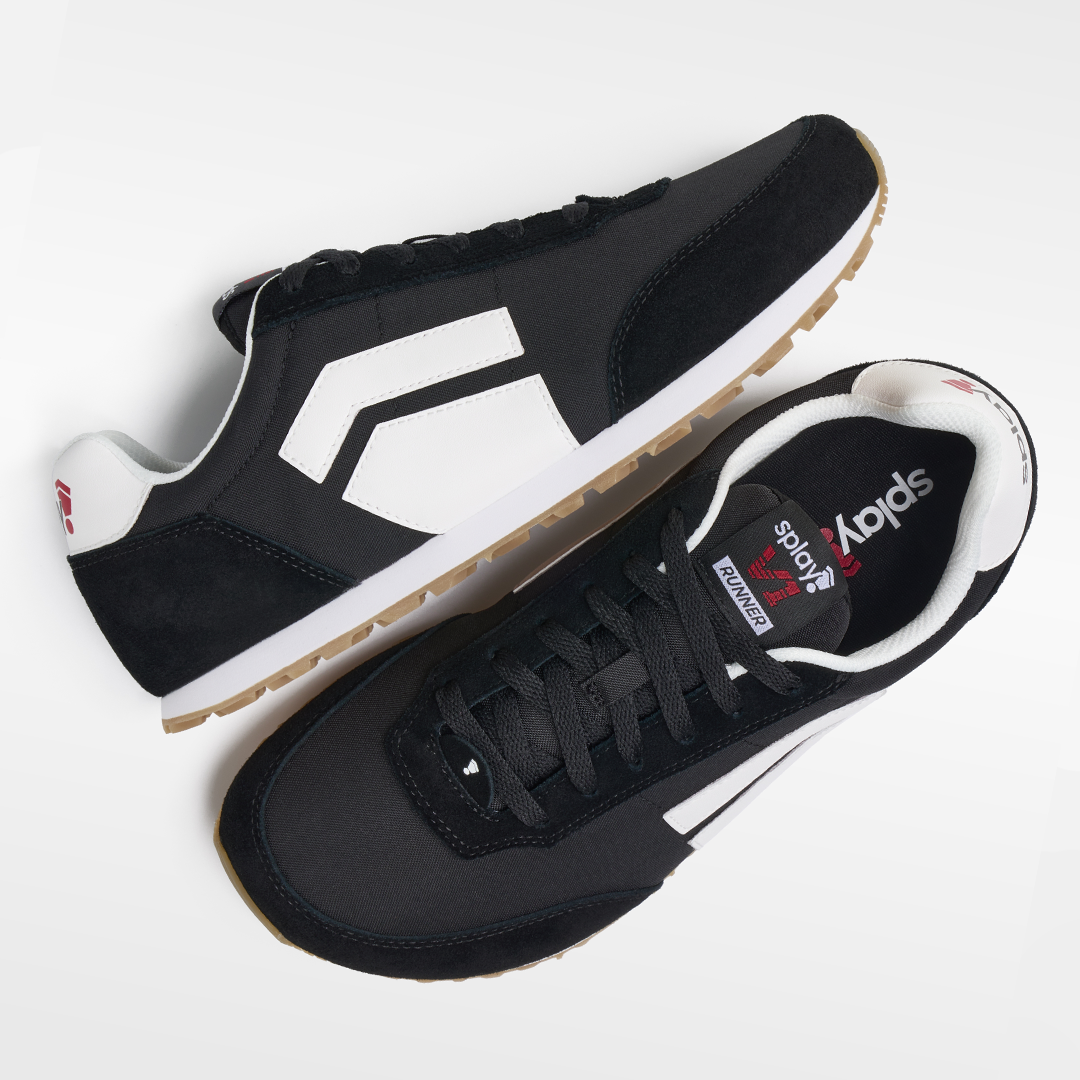
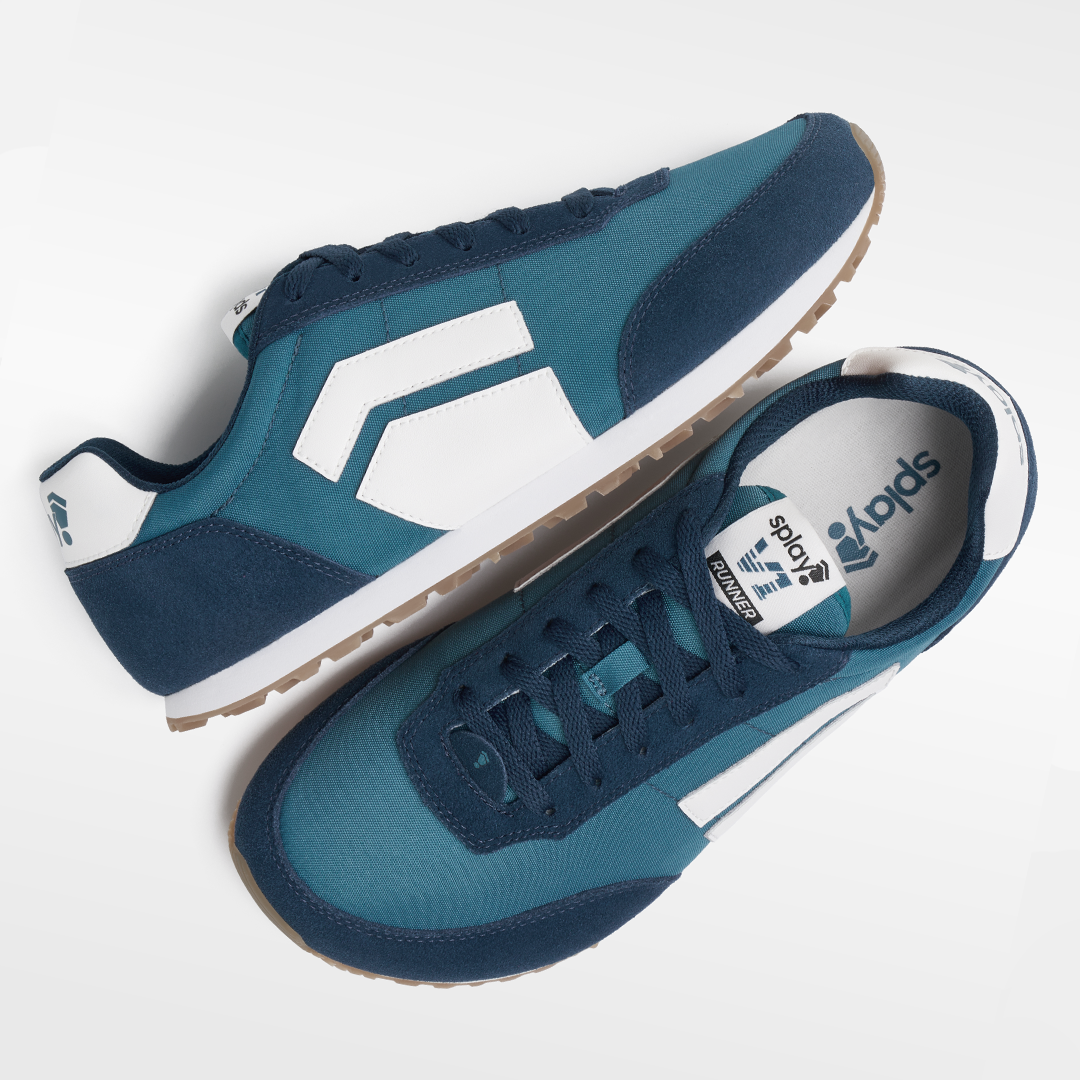
The Splay RUNNER V1 brings these features together in a running shoe designed to give your feet more room to move.
It features a foot-shaped toe box that gives your toes space at the front, along with a zero-drop design that keeps the heel and forefoot level. Its durable, flexible rubber outsole moves with the foot, while a 10mm EVA midsole and removable insole add cushioning without turning the shoe into a bulky traditional trainer.
For runners with flat feet, that makes the RUNNER V1 worth considering if you're looking for a shoe that prioritizes toe room, flexibility, a level platform, and moderate cushioning rather than relying on a highly structured design.
It isn't a corrective shoe or a treatment for flat feet. It's simply a different approach to running footwear, one built around giving your feet space to move comfortably.

Frequently Asked Questions
Are zero drop running shoes good for flat feet?
Zero-drop running shoes may feel comfortable for some runners with flat feet, but they aren't automatically the right choice for everyone. If you're switching from shoes with a higher heel-to-toe drop, transition gradually and pay attention to how your feet and lower legs respond.
Do wide toe boxes matter for flat feet?
A wide, foot-shaped toe box gives your toes more room to sit and spread naturally instead of being squeezed together. For runners with flat feet, it can be worth considering alongside overall fit, cushioning, flexibility, and comfort.
Should I switch to minimalist running shoes immediately?
Probably not. If you're used to conventional running shoes, a gradual transition gives your body time to get familiar with a different feel.
Can you run long distances in zero-drop shoes?
Yes, some runners use zero-drop shoes for long-distance running. If you're new to zero drop, build up your mileage gradually rather than switching immediately to longer runs.
What should runners with flat feet look for in running shoes?
Focus on overall comfort and fit rather than a single feature. Look for enough toe room, a secure fit, appropriate cushioning for your needs, and a sole that allows comfortable movement while you run.
Give Your Feet More Room to Move
Finding the best running shoes for flat feet does not have to mean searching for the shoe with the longest list of corrective features.
Sometimes, simpler can make more sense.
Look for enough toe room. Pay attention to flexibility. Consider how a level platform feels. Most importantly, choose a shoe that lets you run comfortably without making your feet feel trapped.
If you're curious about a more natural approach to running footwear, explore the RUNNER V1 collection and find the option that feels right for the way you move.


